
To identify mold, it’s crucial to pinpoint the early indicators. A moldy odor and stains are two prime signs. If you see chipped paint and dampness hidden in bathrooms or walls, consider them as signs of mold, as well.
Mold inside walls does not show up all at once. It builds slowly, often out of sight. One day the room looks fine. Then a faint smell appears. A small stain shows up near the baseboard. That is how it usually begins.
In many U.S. cities, mold gets a welcoming place. This is because of natural conditions like mild humidity. This, along with the coastal air is almost everything a mold needs to begin. Still, it stays invisible to the naked eye for a long time.
So how do you catch it early? More importantly, how do you know when it is serious?
Let’s find out the signs that most homeowners miss.
Why Mold Grows Inside Walls in the First Place
Mold needs three simple things. Moisture, warmth, and a food source. The last one is usually drywall or wood.
Walls provide all of that. A slow pipe leak or even trapped humidity can feed mold growth for weeks. Drywall absorbs moisture like a sponge. Thus, it becomes the perfect breeding ground.
This is why early detection matters. Once mold spreads inside walls, it becomes harder to remove.
7 Warning Signs to Detect Mold Inside Walls Fast
1. A Persistent Musty Smell That Won’t Go Away
You don’t see mold at the initial stage. But you can smell its distinct odor. It’s a stale, moist smell. You might clean the place from where it is coming. Yet, you still can smell it.
Ask yourself:
- Is the smell more pronounced in one space?
- After a rain spell, does it get stronger?
- Does it return after you air out the space?
Did you say yes to these questions? It means that there’s hidden mold behind the walls.
2. Dark or Discolored Patches on Walls
Pure black hue is regarded as that of mold. It is true. But it’s not always the case. Mold has diverse colors. It can appear as green or gray. Brown spots are also mold.
These marks are tiny initially. But they change with the days. Some may take on a darker color. Others can spread. Yet other times, you may see them near roofs or corners.
Look closely at:
- Areas near windows
- Spots behind furniture
- Walls near plumbing lines
If stains seem to grow or change shape, it is worth investigating further.
3. Peeling Paint or Bubbling Wallpaper
Paint and wallpaper react quickly to moisture. When water gets trapped inside walls, the surface starts to shift.
You may notice:
- Paint bubbling or cracking
- Wallpaper lifting at the edges
- Uneven or soft patches
This often happens before visible mold appears. It is your wall telling you something is wrong behind it.
4. Warped or Soft Drywall
Touch the wall gently. Does it feel solid, or slightly soft?
Drywall should always feel firm. If it feels spongy or uneven, moisture may have weakened it. That creates the perfect condition for mold growth.
Here is a simple check:
- Press lightly on the wall surface
- Notice any give or softness
- Compare with other dry areas
If one section feels different, it may be hiding a deeper issue.
5. Recent Water Damage or Leaks
Think back to any recent issues. A small leak can lead to mold if not dried properly.
Common sources include:
- Burst or leaking pipes
- Roof leaks after heavy rain
- Overflowing appliances like dishwashers or washing machines
Sometimes, the surface looks dry. But moisture may still be trapped inside the wall.
This is where many homeowners get caught off guard. The visible water is gone. But the damage continues behind the scenes.
6. Increased Allergy or Respiratory Symptoms
Does any family member suddenly experience coughing or sneezing? Unlike the common cold, these symptoms don’t disappear after a few weeks. They continue. What’s behind it? Mold is what’s causing it. It impacts the quality of the air initially. At this time, it’s not really visible to the eye. So, people do not equate coughing or sneezing with mold.
You may notice more than just sneezing or itchy eyes. Mold exposure can also lead to:
- Ongoing coughing or wheezing
- Nasal congestion or chronic sinus issues
- Skin rashes
- Headaches or fatigue
- Breathing discomfort. You can see it prominently in closed rooms
Some people are more sensitive than others. Below are those that carry the most risk:
- Children
- Older adults
- Those with asthma
- Those with weak immune systems
Think about patterns in your home:
- Do symptoms get worse in one specific room?
- Do they feel stronger at night or early morning?
- Do they become less pronounced when you are not at home?
Did you say yes to these? It points to a simple thing. There is an issue in your home environment. Mold hidden inside the walls is the culprit most often.
7. Damp Spots on Walls
Humidity is another source of moisture.
Moisture buildup in the kitchen or bathroom makes a clammy environment. This moisture goes inside the walls after some time. It fuels mold growth.
Watch for:
- Water droplets on walls or windows
- Damp patches that do not dry quickly
- Cold wall surfaces that attract moisture
This is common in coastal cities where humidity stays consistent year-round.
Health Risks of Mold Inside Walls
Mold inside walls is not just a home issue. It can affect your health in real ways. The scary part is that you may not even see it at first.
Many people ignore early signs like a musty smell or mild irritation. But over time, exposure can build up and cause bigger problems.
What the Data Shows
Health agencies have studied mold for years. The numbers clearly show why it should not be ignored.
- The EPA estimates that about 4.6 million asthma cases in the U.S. are linked to dampness and mold exposure.
- The WHO reports that improving indoor mold conditions can reduce asthma symptoms by 25% to 45%.
- The CDC states that mold exposure can cause stuffy nose, throat irritation, coughing, and skin irritation. These can be experienced by healthy people as well.
- People with asthma or allergies may experience more severe reactions. This includes breathing difficulty and flare-ups.
Common Health Effects You Might Notice
Symptoms often start small. That is why they are easy to overlook at first.
You might notice:
- Sneezing that does not go away
- A constant runny or blocked nose
- Itchy or watery eyes
- Dry or irritated skin
- A mild cough that lingers
Over time, these can turn into more serious breathing issues, especially for kids and older adults.
Why Hidden Mold Is More Dangerous
Mold inside walls is harder to detect. That makes it more risky.
Air flows through your home every day. HVAC systems can spread mold spores from walls into living spaces. You may breathe them in without knowing.
This is why some people feel worse at home but better when they leave the house.
When to Take It Seriously
Ask yourself a few simple questions:
- Do symptoms improve when you leave home?
- Is there a musty smell that never goes away?
- Has there been a recent leak or water damage?
If the answer is yes, mold inside walls could be the cause.
At that point, it is not just about cleaning. It becomes a health decision.
How to Detect Mold Inside Walls Without Opening Them
Do you really need to break open a wall to find mold? In many cases, no. There are ways to spot early signs without damage.
Non-Invasive Ways to Check
These small checks often give strong clues.
- Notice any musty or damp smell in one area
- Look for stains, bubbling paint, or uneven patches
- Touch the wall gently to feel for soft or damp spots
- Compare nearby rooms for similar signs
These signs do not confirm mold on their own. However, they help narrow down where to look next.
Tools Professionals Use to Detect Hidden Mold
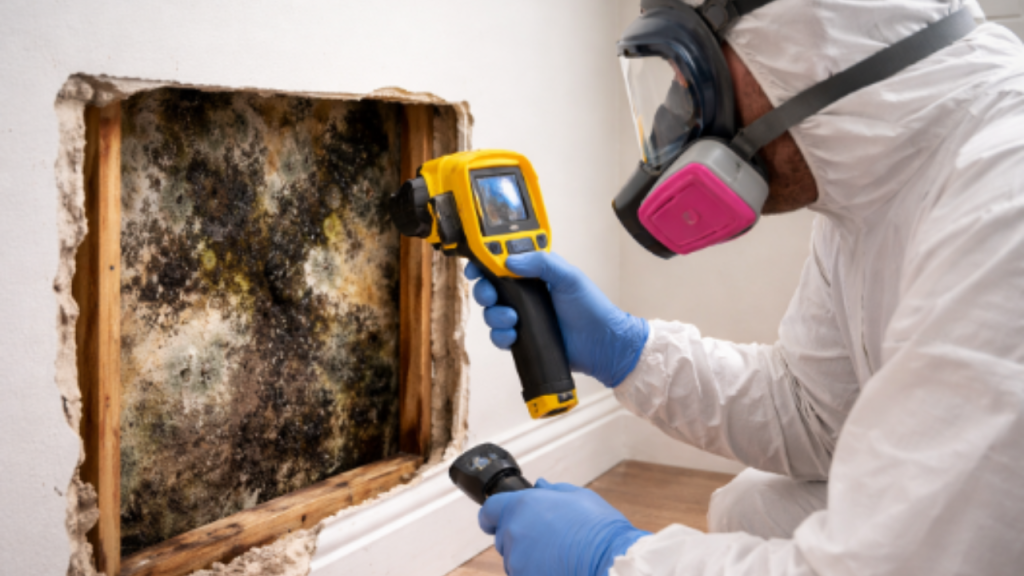
Sometimes, the signs are not clear enough. That is when professionals step in with tools that go deeper. These tools help find moisture and mold without tearing down walls.
Moisture Meters
Moisture meters check how much water is inside a wall. There are two common types. Pin meters use small probes that go into the surface. Pinless meters scan the wall without making holes. High readings often mean trapped moisture. This can lead to mold. These tools are widely used and can also be found in hardware stores.
Thermal Imaging Cameras
These cameras do not see mold directly. Instead, they detect temperature differences on surfaces. Wet areas often appear cooler than dry ones. This creates a pattern that points to hidden moisture pockets behind the wall. It is a fast way to scan large areas without damage.
Borescope Cameras
A borescope is a small camera attached to a thin tube. Professionals drill a tiny hole in the wall and insert the camera inside. This allows a direct view without removing large sections of drywall. It is useful when there is a strong reason to suspect mold in one spot.
Air Quality and Spore Testing
Air tests measure the number of mold spores in the air. Samples are taken indoors and compared with outdoor levels. If indoor levels are much higher, hidden mold may be present. This method is helpful when there are health symptoms but no visible signs.
Each tool adds a layer of clarity. When used together, they give a clear picture of what is happening inside your walls without major damage.
Common Mold Types Found Inside Walls (Black Mold vs. Others)
Different mold types carry the same level of risk. Knowing the type can help you understand what you are dealing with.
Black Mold (Stachybotrys chartarum)
This is the one most people worry about. Black mold usually appears dark green or black. It often has slimy or wet look. This mold type is present in areas with constant moisture.
It tends to grow on materials like drywall and wood. Long-term exposure may affect air quality and health. This type often forms after water damage that was not dried properly.
Cladosporium
Cladosporium is very common indoors. It can appear as green, brown, or even black spots. The texture may look powdery or velvety.
It grows on wood and painted surfaces. This mold type is not always toxic. But it can still trigger allergies and breathing issues.
Aspergillus
Aspergillus comes in many colors. These include yellow, green, or white. It often forms in clusters. The mold type spreads quickly in damp areas.
It is commonly found in walls and air ducts. Some strains can cause stronger reactions. This is especially for people with weak immune systems.
Penicillium
Penicillium usually looks blue or green. It has a soft, fuzzy texture. This mold type spreads fast once moisture is present.
It is often found in water-damaged walls and insulation. It can affect indoor air quality and may lead to allergy symptoms.
Quick Comparison
| Mold Type | Common Color | Where It Grows | Risk Level |
| Black Mold | Dark green or black | Drywall, wood, insulation | Higher concern |
| Cladosporium | Green, brown, black | Wood, fabrics, surfaces | Moderate |
| Aspergillus | Yellow, green, white | Walls, ducts, insulation | Moderate to high |
| Penicillium | Blue or green | Walls, carpets, insulation | Moderate |
When Should You Be Concerned?
Certain situations need quick action. You should take it seriously if:
- The affected area keeps growing
- The smell spreads across rooms
- The wall feels soft or damaged
- Symptoms worsen indoors
Another key factor is size. Does the mold cover more than about 10 square feet? You need professional help in this case. Do not attempt to use DIY methods in this scenario.
What Happens If You Ignore Mold Inside Walls
It might feel tempting to wait and see. But mold rarely goes away on its own.
Over time, it can:
- Weaken drywall and wood structures
- Spread to other parts of the home
- Affect indoor air quality
- Increase repair costs significantly
A small hidden patch can turn into a major restoration project if left unchecked.
What to Do Next After Detecting the Signs
Noticing the signs is only the first step. What you do next depends on how serious the problem looks.
For Small, Surface-Level Issues
If the mold is limited and easy to reach, you can act quickly. The goal is to stop moisture and prevent it from spreading.
- Clean the surface using proper mold-safe cleaners
- Dry the area completely after cleaning
- Improve airflow with fans or open windows
- Fix small leaks like dripping pipes or minor cracks
These steps work best when the affected area is small. At the same time, the material is still solid. Acting early can prevent a bigger issue later.
For Hidden or Spreading Mold
Mold inside walls means moisture is trapped behind the structure.
Disturbing mold can make things worse. When mold is touched or broken, it releases tiny spores into the air. These spores can travel to other rooms and start new growth. That is why cutting into drywall without proper protection is risky.
Instead, it is safer to take a controlled approach:
- Avoid touching or scrubbing the affected area
- Do not open walls without proper safety gear
- Limit airflow that could spread spores
What a Professional Inspection Looks Like
When the situation is unclear, professionals step in with a structured process. They do more than just look at the surface.
- Visual inspection to identify visible signs and risk areas
- Moisture metering to detect hidden damp spots inside walls
- Air sampling to measure mold spore levels indoors
What Happens During Mold Remediation
If mold is confirmed, the next step is removal. This process is done carefully to avoid spreading contamination.
- Containment: The affected area is sealed to stop spores from spreading
- HEPA filtration: Air scrubbers remove mold particles from the air
- Material removal: Damaged drywall or insulation may be taken out
- Cleaning and treatment: Surfaces are cleaned and treated to prevent regrowth
- Clearance testing: Final checks ensure the area is safe again
Each step is designed to restore both the structure and indoor air quality.
What About Insurance Coverage
In some cases, insurance may help cover the cost. This usually depends on the cause of the mold.
- Mold from sudden events like burst pipes may be covered
- Mold from long-term neglect is usually not covered
- Proper documentation helps support your claim
It is always a good idea to review your policy and report damage early.
If there is any doubt, it is safer to get a professional opinion. Revive Pro Restoration helps homeowners in areas like San Diego and Los Angeles detect and remove hidden mold safely. Our team uses advanced tools to find moisture and contain affected areas.
FAQs
How fast does mold grow inside walls?
Mold can start growing within 24 to 48 hours after moisture appears. This often happens after leaks or water damage. Inside walls, it spreads quietly because the area stays dark and damp. Even a small leak can lead to mold growth in just a couple of days if it is not fixed quickly.
Can mold inside walls make you sick?
Yes, mold inside walls can affect your health over time. It can cause sneezing, coughing, and itchy eyes. Some people may feel tired or have breathing problems. Those with asthma or allergies may feel worse. Since mold spores spread through the air, you can be exposed without even seeing the mold.
How do I test for mold inside walls without opening them?
You can look for signs like musty smells, stains, or peeling paint. Moisture meters can help check damp areas. Some people use air test kits, but results may not always be clear. Professionals use advanced tools to confirm mold without breaking walls, which gives more accurate and reliable results.
What does mold smell like inside walls?
Mold inside walls often smells musty and damp. Many people compare it to wet socks or old wood. The smell may come and go but usually gets stronger over time. If a room smells stale even after cleaning, hidden mold inside the walls could be the reason behind that odor.
How much does mold remediation cost in California?
The cost depends on how much mold is present and where it is located. Small areas may cost a few hundred dollars to clean. Larger problems inside walls can cost several thousand dollars. In California, most jobs fall between $1,500 and $6,000, but severe cases can go much higher.
Is mold inside walls dangerous?
Yes, mold inside walls can be risky if left untreated. It can damage wood, drywall, and insulation over time. It may also affect indoor air quality. Long-term exposure can lead to health problems, especially for children and older adults. The hidden nature of wall mold makes it more concerning.
How do professionals find mold inside walls?
Professionals use tools that go beyond what the eye can see. They use moisture meters to detect damp spots. Thermal imaging cameras help find hidden moisture behind walls. In some cases, they take air samples to check for mold spores. These methods help locate mold without opening large sections of walls.
Does homeowner insurance cover mold inside walls?
Insurance may cover mold if it is caused by a sudden event, like a burst pipe. However, it usually does not cover mold from long-term neglect or slow leaks. Coverage depends on your policy details. It is important to report damage quickly and keep records to support your claim.Can I paint over mold inside walls?
Painting over mold is not a real fix. It only hides the problem for a short time. The mold will continue to grow under the paint. This can lead to more damage later. It is always better to remove the mold properly and fix the moisture issue before repainting the surface.