
Key Takeaways
- Stop the water source fast if safe.
- Document all damage before cleanup.
- Call insurance right away.
- Hidden moisture causes bigger damage later.
- Mold can start within 48 hours.
- DIY drying often misses trapped water.
- Professional restoration protects your home long term.
- Fast action lowers repair costs.
The first thing to do after severe water damage is stop the water source. Ensure to stay safe, and call a professional restoration team right away.
Water damage gets worse by the hour. Within minutes, water spreads into flooring and furniture. Within hours, drywall begins swelling. Within 24 to 48 hours, mold can begin growing.
After several days, structural damage becomes much more likely. This is why waiting is expensive.
A delay can lead to:
- Mold growth
- Warped flooring
- Weak drywall
- Electrical hazards
- Rotting wood framing
- Permanent odor
- Insurance claim issues
A quick response turns a rebuild into a repair.
Professional severe water damage restoration can stop deeper damage. It can lower repair costs, and help get life back to normal faster.
Let’s walk through exactly what to do.
1. Stop the Water Source
This comes first if it is safe. Find the source and shut it off. Common causes can be:
- Burst pipes
- Overflowing toilets
- Appliance leaks
- Roof leaks
- Broken water heaters
- HVAC system failure
If the source is unclear, shut off the home’s main water valve. Every homeowner should know where this is.
2. Stay Safe Before Anything Else
Water damage can create serious hazards. Do not walk into standing water if electrical outlets or appliances are nearby. Turn off electricity if it is safe to reach the breaker.
Watch for:
- Sagging ceilings
- Soft flooring
- Wet electrical panels
- Exposed wiring
- Slippery surfaces
If there is any doubt, wait for professionals.
3. Document Everything Before Cleanup Starts
Before moving anything, take photos and videos. Capture:
- Standing water
- Wet walls
- Ceiling damage
- Flooring damage
- Damaged furniture
- Appliance leaks
- Electronics exposure
Good records help with:
- Insurance claims
- Faster approvals
- Damage estimates
- Replacement disputes
4. Call Insurance Right Away
Once the damage is documented, call your insurance company as soon as possible.
Water damage claims usually move faster when they are reported early. That first call creates the claim record. It starts the review process.
Before calling, have these details ready:
- Policy number
- Property address
- Time the damage was found
- Cause of the water loss if known
- Photos and videos of all visible damage
Keep a notebook nearby and write down:
- Claim number
- Adjuster’s full name
- Direct phone number or email
- Date and time of every call
- Notes from each conversation
What Water Damage Is Usually Covered
Coverage often depends on how the water damage started.
| Cause of Damage | Usually Covered? |
| Sudden burst pipe | Yes |
| Water heater failure | Often yes |
| Appliance overflow | Often yes |
| Storm flooding from outside | No, unless covered by separate flood insurance |
| Slow leak over time | Sometimes denied |
| Neglected maintenance issue | Often denied |
Know Your Policy Type
Most policies use one of two methods:
Actual Cash Value (ACV)
This pays based on the current value of damaged items after depreciation. Older flooring or appliances may pay less.
Replacement Cost Coverage
This pays what it costs to replace damaged materials with similar new ones, up to policy limits. This usually means better reimbursement.
If you are unsure which one applies, ask the adjuster directly.
How to Avoid Your Claim Getting Denied
A few smart steps can lower problems later:
- Report the damage right away
- Do not throw damaged items away too soon
- Take clear photos before cleanup
- Save receipts for emergency repairs
- Prevent further damage if safe to do so
- Bring in certified restoration experts fast
Professional documentation matters. Insurance companies trust detailed moisture readings and written restoration assessments. It makes approvals easier.
Revive Pro Restoration Helps Handle Insurance Communication
Revive Pro Restoration works directly with insurance companies and adjusters. The team documents damage and provides detailed reports. This helps explain what repairs are needed.
That clear communication often speeds up approvals.
5. Call a Severe Water Damage Restoration Company Fast
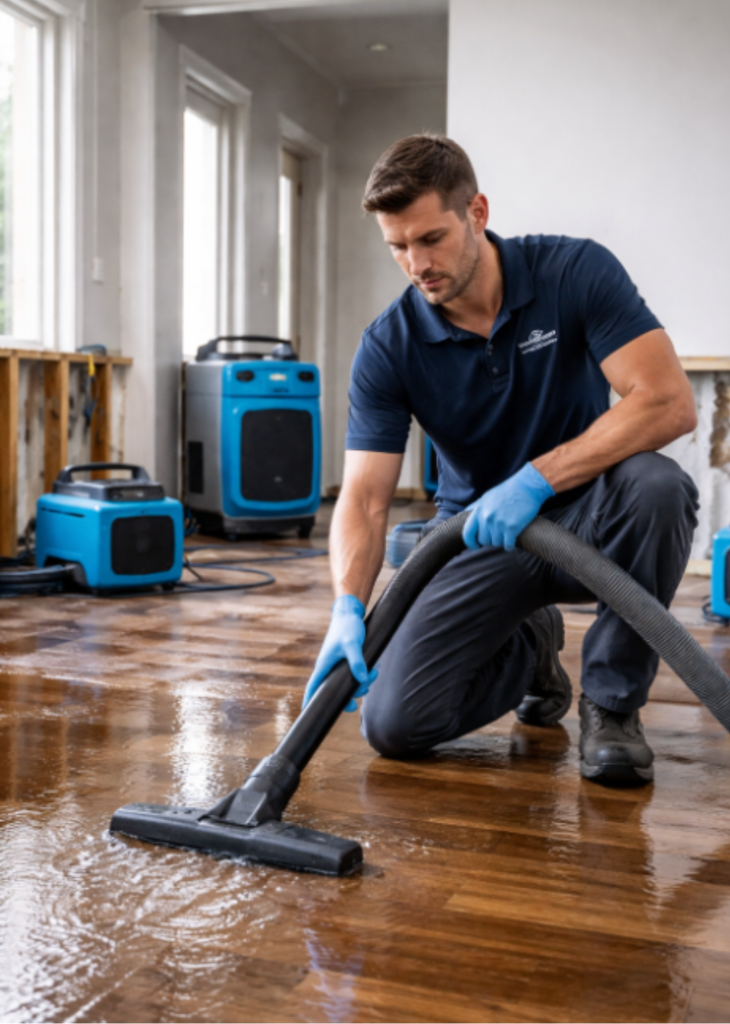
A mop and shop vacuum will not fix major water loss. Professional teams use commercial drying tools and moisture detection equipment to stop hidden damage.
Revive Pro Restoration is IICRC certified. It means that our work follows trusted restoration standards. That matters for insurance claims and long term protection.
What Severe Water Damage Restoration Looks Like
Professional restoration follows a clear system. Here’s what takes place.
Step 1: Inspection and Assessment
Technicians inspect every affected area to find visible and hidden moisture. Special tools help find what the eye misses.
These often include:
- Thermal imaging cameras to detect hidden cold spots caused by moisture
- Moisture meters to measure water levels inside drywall and wood
- Hygrometers to check indoor humidity levels
- Infrared scanning tools for deeper moisture mapping
This step usually takes 1 to 3 hours depending on home size.
Step 2: Water Extraction
Once the damage is mapped, standing water is removed fast. This is where commercial equipment matters.
Restoration teams use:
- High powered extraction pumps
- Truck mounted vacuum systems
- Portable water extractors for tight spaces
Fast extraction limits damage. This phase often takes several hours to one full day. It depends on water depth.
Step 3: Drying and Dehumidification
Even after standing water is gone, moisture remains inside materials. This stage removes what cannot be seen.
Teams place:
- Industrial air movers
- Commercial dehumidifiers
- HEPA filtered air scrubbers when needed
Moisture readings are checked daily. Drying usually takes 3 to 5 days. But evere losses can take longer.
Step 4: Cleaning and Sanitizing
Gray water and black water often carry bacteria and harmful contaminants. Surfaces are cleaned using:
- Professional antimicrobial solutions
- HEPA vacuum systems
- Surface sanitizers approved for restoration work
This protects both the home and indoor air quality. Cleaning usually takes 1 to 2 days depending on contamination levels.
Step 5: Odor Removal and Air Treatment
Water damage often leaves a stale smell. That odor comes from trapped moisture and microbial growth.
Professionals use:
- Air scrubbers
- Hydroxyl generators
- Odor neutralizing systems
These remove odor at the source instead of covering it up. This phase often overlaps with drying and may last 24 to 72 hours.
Step 6: Repairs and Reconstruction
Once moisture levels are safe, repairs begin. This may include:
- Drywall replacement
- Flooring installation
- Cabinet rebuilding
- Trim repair
- Painting
- Structural rebuilding if needed
Repair timelines vary. Small repairs may take 2 to 5 days. Major reconstruction can take weeks or longer.
Understanding Water Damage Categories and Classes
Some water is mostly clean. Some carry bacteria. Some are dangerous the moment it enters the home. This is why professional restoration teams classify water damage before cleanup begins.
Water Damage Categories Explained
There are three main water categories.
| Category | Water Type | Common Source | Health Risk | Typical Cleanup Cost |
| Category 1 | Clean Water | Broken supply lines, sink overflow, rainwater before contamination | Low if handled quickly | Lower |
| Category 2 | Gray Water | Dishwasher leaks, washing machine overflow, sump failure | Moderate due to bacteria and contaminants | Moderate |
| Category 3 | Black Water | Sewage backup, floodwater, toilet overflow with waste | High and unsafe without professional cleanup | Highest |
Let’s break that down.
Category 1: Clean Water
This is the safest type. It usually comes from a clean source like:
- Burst water supply pipes
- Overflowing sinks without waste contamination
- Fresh rainwater entering early
If clean water sits too long, usually 24 to 48 hours, it can become contaminated and move into Category 2. That is one reason fast restoration matters so much. The longer water sits, the worse it gets.
Category 2: Gray Water
Gray water may carry bacteria, soap residue, or chemicals. Common sources include:
- Washing machine overflow
- Dishwasher leaks
- Sump pump failure
- Toilet overflow without solid waste
This water should not be ignored. Skin contact can be risky.
Cleanup usually involves:
- Protective equipment
- Professional disinfecting
- Material inspection and possible removal
Category 3: Black Water
Black water contains harmful bacteria, sewage, and toxic contaminants. Common causes include:
- Sewage backups
- Floodwater entering from outside
- Toilet overflow with waste contamination
- Standing water exposed for long periods
This water is unsafe. Professional restoration is not optional here.
Cleanup often requires:
- Full protective gear
- Removal of damaged porous materials
- Deep sanitizing
- Specialized drying and air cleaning
This classification shapes the entire restoration plan. It tells professionals:
- What safety gear is needed
- Which materials can be saved
- What must be removed
- How long drying will take
- What the final cost may look like
Revive Pro Restoration uses IICRC-certified assessment methods to classify water damage correctly from the start. That helps avoid mistakes and protects health. It also keeps insurance documentation clear.
How Fast Mold Starts After Severe Water Damage
Mold can begin growing within 24 to 48 hours. Warm indoor temperatures speed things up.
Signs mold may already be starting:
- Musty smell
- Allergy symptoms
- Dark spots on walls
- Increased humidity
Once mold spreads, repairs become much more expensive. This is why quick restoration is critical.
How Much Does Severe Water Damage Restoration Cost?
Costs depends on:
- How far the water spread
- What type of water caused the damage
- How fast restoration begins.
The average U.S. homeowner spends about $3,863. Most projects range between $1,383 and $6,381 for standard restoration work. Severe structural damage can cost much more.
Here is what severe water damage restoration often costs.
| Damage Level | Typical Cost Range | What It Usually Includes |
| Minor cleanup | $1,500 to $5,000 | Extraction, drying, moisture checks |
| Moderate restoration | $5,000 to $15,000 | Drying, material removal, repairs |
| Severe structural damage | $15,000 to $50,000+ | Full rebuild, mold treatment, reconstruction |
Cost Breakdown by Service Type
Restoration pricing is usually built in stages.
| Service | Typical Cost Range |
| Emergency water extraction | $500 to $3,000 |
| Structural drying | $1,000 to $4,500 |
| Mold remediation | $1,500 to $6,000+ |
| Drywall and flooring replacement | $2,000 to $12,000+ |
| Major reconstruction | $10,000 to $50,000+ |
How Insurance Changes Out-of-Pocket Costs
Insurance often helps if the water damage is sudden and accidental. This usually includes:
- Burst pipes
- Water heater failure
- Appliance overflow
Insurance often denies or limits claims caused by:
- Slow leaks
- Long term neglect
- Maintenance issues
- Ground flooding without separate flood coverage
If insurance covers the loss, homeowners usually pay only the deductible. Without coverage, full restoration costs become out of pocket.
Water damage feels overwhelming when it happens. Still, homes can certainly recover from it.
The key is acting fast and getting the right help before water settles in and turns a bad day into something much bigger.
FAQs
Does homeowners insurance cover water damage?
Yes, homeowners insurance often covers water damage if it is sudden and accidental. This can include burst pipes, appliance failures, or water heater leaks. It usually does not cover slow leaks, poor maintenance, or flooding from outside the home. Flood damage often needs separate flood insurance coverage.
What are the water damage categories (1, 2, 3)?
Water damage has three categories based on contamination level. Category 1 is clean water from pipes or rain. Category 2 is gray water from appliances or drains and may contain bacteria. Category 3 is black water, like sewage or floodwater, and is dangerous without professional cleanup.
Can I stay in my house during water damage restoration?
Sometimes yes, but it depends on the damage. Small clean water issues may allow people to stay home. Large damage, mold risk, sewage contamination, or heavy drying equipment often make staying unsafe or uncomfortable. A restoration team will inspect the home and explain if temporary relocation is best.
How do I know if water damage is behind my walls?
Hidden water often shows warning signs. Watch for bubbling paint, peeling wallpaper, soft drywall, musty smells, warped trim, or stains that keep growing. Humidity that feels unusually high indoors can also signal hidden moisture. Professional moisture meters and thermal imaging tools can confirm damage behind walls.
What does black water damage mean?
Black water damage means the water is heavily contaminated and unsafe. It often comes from sewage backups, toilet overflows with waste, or outside floodwater. This water can carry harmful bacteria and toxins. Professional cleanup is necessary because damaged materials often need removal and deep sanitizing.
Is water damage tax deductible?
Usually, water damage is not tax deductible for most homeowners. Federal tax rules only allow casualty loss deductions in limited disaster situations, such as federally declared disasters. Standard household water damage claims usually do not qualify. A tax professional can confirm if a specific loss meets current IRS rules.