
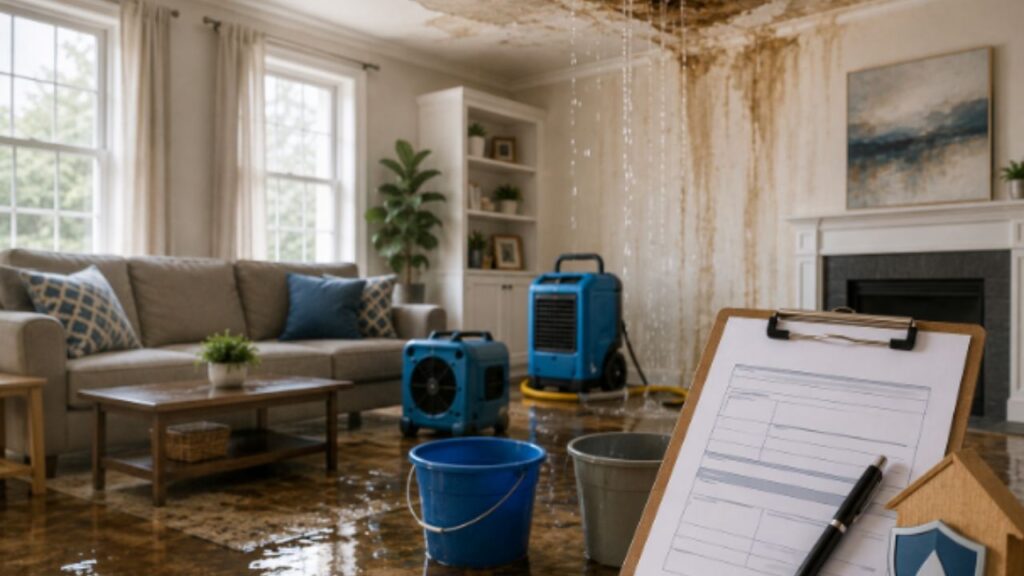
When it comes to filing a water damage insurance claim, what you do during the first few hours is the most critical. Quick action helps protect the home. It also strengthens the insurance claim.
Find out the smartest steps to take after water damage to save yourself from costly repair work.
Tip #1: Stop the Water Source Immediately
First, stop the water if it is safe. Nothing else matters until the leak stops.
Different situations require different actions.
| Cause | First Step |
| Burst pipe | Shut off the home’s main water valve. |
| Overflowing appliance | Turn off the appliance and water supply. |
| Water heater leak | Turn off the water heater and cold water supply. |
| Roof leak | Place containers under active drips and protect belongings. |
If electricity may have reached standing water, stay away from the area. Call the utility company or emergency services if electrical hazards exist.
Tip #2: Protect People and Property
Take a slow look around before entering damaged rooms. Wet floors become slippery. Ceiling materials may weaken. Electrical outlets near water can become dangerous. Move people and pets away from unsafe areas. If possible, protect belongings that are still undamaged.
Simple actions include:
- Moving furniture onto dry surfaces.
- Placing aluminum foil or wood blocks under furniture legs.
- Removing rugs from wet floors.
- Picking up electronics from damp areas.
- Taking valuable documents to a dry location.
Do not throw away damaged items right away. Insurance adjusters often need to inspect them first. If something must be discarded for health reasons, take several clear photos before removing it. These become valuable evidence during the claim.
Tip #3: Document Everything Before Cleanup Starts
Once cleanup begins, some evidence disappears forever. That is why taking photos before moving anything is paramount. Walk through every affected room slowly. Then record a video showing the full extent of the damage.
Capture:
- Wet ceilings.
- Damaged walls.
- Standing water.
- Warped flooring.
- Wet furniture.
- Damaged cabinets.
- Electronics.
- Personal belongings.
- The source of the leak, if visible.
Take both wide photos and close-up images. Wide photos show the overall damage, while close-up photos capture important details.
A table like this keeps everything organized.
| Item | Damage | Estimated Age |
| Sofa | Water soaked | 4 years |
| Television | Water exposure | 2 years |
| Area rug | Heavy saturation | 3 years |
| Coffee table | Swollen wood | 5 years |
Save copies of:
- Photos
- Videos
- Contractor reports
- Emergency service invoices
- Moisture inspection reports
- Drying equipment receipts
Store everything in one folder. A good idea is to upload the copies to cloud storage. This keeps it safe even if your phone or laptop gets damaged.
At Revive Pro Restoration, our team documents moisture readings, affected materials, and drying progress. These records adequately show the full extent of the damage.
Tip #4: Report the Water Damage to Your Insurance Company Quickly
Now, contact the insurance company. Most homeowners insurance policies require prompt notice after discovering damage. Many insurers expect claims within 24 to 72 hours. Reporting early protects the claim. It also allows the insurer to begin the process sooner.
Before calling, gather:
- Policy number
- Property address
- Date and time the damage was found
- Cause of the damage, if known
- Photos and videos
- Emergency mitigation invoices
During the call, write down:
- Claim number
- Adjuster’s name
- Direct phone number
- Email address
- Date and time of every conversation
Tip #5: Understand What Your Insurance Usually Covers
Every water loss is not covered during insurance. Coverage depends on both the cause of the damage and the policy details. In general, homeowners insurance covers sudden and accidental water damage. It usually does not cover damage caused by poor maintenance or flooding.
The table below explains common situations.
| Water Damage Event | Typical Coverage |
| Burst pipe | Usually covered |
| Water heater failure | Usually covered |
| Washing machine overflow | Usually covered |
| Dishwasher leak | Usually covered |
| Roof leak from sudden storm damage | Often covered |
| Slow plumbing leak over months | Often excluded |
| Groundwater seepage | Usually excluded |
| River or coastal flooding | Requires separate flood insurance |
Flood damage does not fall under water damage. Standard homeowners insurance usually does not cover flooding. Flood insurance is typically purchased through the National Flood Insurance Program or private insurers.
Mold is another issue. Some policies cover mold only when it results from a covered water loss. Even then, many policies place dollar limits on mold remediation.
Tip #6: Prevent More Damage After the Loss
Insurance companies expect homeowners to reduce additional damage whenever it is safe. This is called the duty to mitigate. It does not mean completing repairs. It means taking reasonable steps to protect the property.
Examples include:
- Removing standing water.
- Drying wet areas.
- Covering roof openings with tarps.
- Boarding broken windows.
- Moving belongings away from water.
- Using fans when appropriate.
Avoid making permanent repairs before the adjuster inspects the property.
Tip #7: Save Every Receipt and Expense
Water damage creates unexpected costs, many of which may qualify for reimbursement. So, save receipts from the very beginning. Create a folder for every document.
Keep records for:
- Emergency plumbing services
- Water extraction
- Drying equipment
- Hotel stays
- Temporary housing
- Restaurant meals, if covered
- Laundry expenses
- Storage unit fees
- Building materials
- Cleaning supplies
Some homeowners policies include Additional Living Expenses, also called ALE. ALE may help pay for temporary costs if the home cannot be lived in during repairs.
You can also create an expense log like this:
| Expense | Date | Amount |
| Hotel stay | July 8 | $185 |
| Laundry | July 9 | $28 |
| Water extraction | July 8 | $640 |
| Temporary storage | July 10 | $120 |
Tip #8: Work With a Professional Restoration Company
A restoration company focuses on emergency damage. The professionals begin drying immediately while documenting every step. Professional restoration companies also use equipment not available to homeowners. These include those like thermal imaging cameras, air movers, and more. These tools help locate hidden moisture and confirm when the structure is fully dry.
Besides, several things that a restoration company does provides proof of the damage. These include:
- Moisture readings
- Drying logs
- Inspection reports
Restoration companies like Revive Pro Restoration also work directly with insurance adjusters. This reduces paperwork for homeowners. It helps answer technical questions during the claim.
What to Do if Your Water Damage Claim Is Denied

Many denials happen because important information is missing. Others result from disagreements about coverage. In this situation, first understand why the claim has been denied.
Follow these steps.
Step 1: Request the Denial in Writing
Ask the insurance company for a written explanation. The letter should include the exact policy language supporting the decision.
Step 2: Review the Policy Carefully
Compare the denial letter with the policy. Look for:
- Coverage limitations
- Exclusions
- Definitions
- Claim requirements
Sometimes a misunderstanding can be resolved quickly.
Step 3: Gather More Evidence
Strong documentation improves an appeal. Helpful evidence includes:
- Restoration inspection reports
- Moisture meter readings
- Plumbing reports
- Contractor assessments
- Photos
- Videos
- Repair estimates
Step 4: Submit a Written Appeal
Explain why the decision should be reconsidered. Attach supporting documents. Keep copies of everything submitted.
Step 5: Consider a Public Adjuster
If needed, hire a licensed public adjuster. They work for the policyholder. They review the damage and help negotiate the claim. The option is suited for complex or high-value losses.
Step 6: Contact Your State Insurance Department
Every state has an insurance regulator. If communication breaks down, file a complaint. The agency may review whether the claim was handled fairly.
Protect Your Home and Your Insurance Claim
Water damage creates enough stress without claim problems. But a few smart decisions can make recovery much easier. Act quickly. Document everything. Save every receipt and work with experienced restoration professionals.
Revive Pro Restoration provides emergency water damage restoration, thorough moisture inspections, professional drying, and detailed insurance documentation. We also work directly with insurance companies to help make the claims process as smooth as possible.
FAQs
What will insurance cover for water damage?
Homeowners insurance usually covers sudden and accidental water damage. This includes burst pipes, appliance failures, and water heater leaks. It usually does not cover flooding or long-term leaks caused by poor maintenance.
What not to say in an insurance claim?
Do not guess what caused the damage. Avoid admitting fault or exaggerating the loss. Stick to the facts. Give accurate information and let professionals determine the full extent of damage.
Can I claim a leaking shower on insurance?
It depends on the cause. A sudden plumbing failure may be covered. Long-term shower leaks caused by poor maintenance are usually not covered. Check your policy for specific coverage details.
What are the two main reasons for denying a claim?
The most common reasons are policy exclusions and lack of maintenance. Claims may also be denied if damage is reported too late or if there is not enough supporting documentation.