
Air quality monitors can sometimes suggest a mold problem behind walls. But they cannot directly confirm hidden mold. They measure things like humidity, particles, and volatile organic compounds (VOCs). These readings may point to conditions that support mold growth. But professional testing is usually needed to confirm what is happening behind the wall.
What Air Quality Monitors Really Measure
An air quality monitor measures environmental conditions that may suggest a mold problem. They look for changes in the indoor environment. These changes often happen when moisture and mold are present.
The Main Readings Air Quality Monitors Track
Most air quality monitors measure:
- Humidity
- Temperature
- Particulate matter (PM2.5 and PM10)
- Carbon dioxide (CO2)
- Total volatile organic compounds (TVOCs)
Looking at one number by itself does not offer a clear answer. The insight comes from spotting patterns over time.
Humidity: One of the Strongest Mold Warning Signs
Mold needs moisture to grow. That is why humidity is often the first thing professionals look at.
EPA says that indoor humidity should stay between 30% and 50%. If levels exceed 60%, mold growth is more likely.
However, a single high humidity reading does not mean mold is growing. The pattern matters.
For example:
| Humidity Pattern | What It May Mean |
| High humidity throughout the entire house | Weather or poor ventilation |
| High humidity only in one room | Possible local moisture source |
| Humidity rises daily in the same area | Potential hidden leak |
| Humidity remains elevated despite AC use | Moisture trapped in building materials |
TVOCs: Sometimes a Clue, But Not Proof
A rise in VOC readings may not mean that mold is present.
TVOCs (Total Volatile Organic Compounds) are gases released by many different sources, including:
- Paint
- Cleaning products
- Furniture
- Building materials
- Cooking
- Candles
- Mold and microbial growth
When mold grows, it gives out certain substances. These are the microbial volatile organic compounds (MVOCs). These create that musty smell of mold.
An air quality monitor cannot tell whether a VOC spike comes from mold or something else. Still, unusual patterns may provide clues.
For example:
- VOC levels rise without obvious sources
- Readings remain elevated for weeks
- Musty odors appear alongside VOC increases
- One room consistently shows higher readings than others
PM10 and PM2.5: Understanding Airborne Particles
Particulate matter measures tiny particles floating in the air. Most monitors track two sizes:
| Particle Type | Size |
| PM2.5 | Smaller than 2.5 microns |
| PM10 | Smaller than 10 microns |
Most mold spores are generally found within the PM10 range. This is because they are larger particles. When spore counts increase indoors, PM10 readings may rise as well.
PM2.5 are smaller particles. They are commonly associated with:
- Smoke
- Combustion
- Fine dust
- Vehicle emissions
- Cooking particles
Mold spores are usually larger than PM2.5 particles. Thus, PM2.5 is a less reliable indicator of mold activity.
That said, air quality monitors cannot determine whether a PM10 particle is dust, pollen, pet dander, or mold spores. They just measure the total amount of particles present.
Carbon Dioxide and Ventilation
CO2 does not indicate mold directly. But it helps reveal ventilation problems. Poor ventilation can trap moisture indoors. Over time, that creates conditions where mold can thrive.
High CO2 levels may suggest:
- Limited fresh air exchange
- Poor airflow
- Rooms that stay damp longer than they should
The risk of unseen moisture goes up in this case. There is high humidity and the ventilation is bad.
Can Air Quality Monitors Detect Mold Behind Walls?
Not directly. Most air quality monitors cannot identify mold colonies hiding inside walls. What they can do is detect warning signs associated with mold growth.
For example:
- Elevated humidity
- Increased airborne particles
- VOC patterns linked to microbial growth
- Poor ventilation conditions
Air quality monitors alert homeowners to unusual indoor conditions. They cannot pinpoint hidden mold with certainty.
Why Mold Behind Walls Is So Hard to Detect
Hidden mold is a frustrating issue because most of the damage happens where nobody can see it.
A small leak inside a wall can stay unnoticed for weeks. During that time, moisture slowly builds up behind drywall, insulation, or flooring.
What surprises many people is how quickly mold can start growing.
If given good conditions, mold expands within 24 hours. This is after the materials become wet. In a few days, the colonies will start expanding. Then, after a few weeks the issue goes beyond the initial moisture source.
Common Sources of Hidden Moisture
Water often gets behind walls through:
- Leaking plumbing pipes
- Roof leaks
- Window seal failures
- HVAC condensation
- Appliance leaks
- Shower and tub plumbing issues
- Exterior siding or flashing failures
How Wall Construction Hides Moisture
Modern homes contain several layers that can trap water out of sight.
These often include:
- Drywall
- Insulation
- Vapor barriers
- Wood framing
- Paint coatings
- Exterior sheathing
When moisture enters the wall cavity, these materials can hide it surprisingly well. This creates the dark, damp environment mold loves.
Mold Often Spreads Beyond What You Can See
Moisture moves through building materials. Mold follows that moisture. As a result, contamination can spread 2 to 3 feet beyond the visible damage area. Sometimes, it can even spread farther.
This is one reason professional inspections are crucial. What appears to be a minor cosmetic issue on the surface can actually be a much larger moisture problem hiding behind the wall.
Signs Hidden Mold May Be Growing Behind Walls
Even if an air quality monitor cannot directly detect mold, the home often provides clues.
Watch for:
Persistent Musty Odors
A musty smell that keeps returning is often one of the earliest signs. The odor may seem stronger:
- After rain
- Near HVAC vents
- In the morning
- In closed rooms
Unexplained Allergy Symptoms
Some people notice:
- Sneezing
- Runny nose
- Itchy eyes
- Headaches
- Coughing
Symptoms that improve when leaving the home may deserve attention.
Wall Discoloration
Look for:
- Yellow stains
- Brown spots
- Dark streaks
- Peeling paint
These signs often indicate moisture issues.
High Indoor Humidity
Indoor humidity should ideally stay between 30% and 50%. Readings above 60% create conditions where mold can thrive.
Health Effects of Hidden Mold Behind Walls
You cannot always see mold growing behind a wall. Yet its spores and fragments can still affect indoor air. That means a room may look perfectly normal while the air quality slowly changes.
According to the CDC and EPA exposure to damp and moldy environments can cause a range of health problems. Sensitive individuals are at a greater risk.
Common Symptoms Linked to Mold Exposure
Many people first notice symptoms before they find the mold itself. Common complaints include:
- Sneezing
- Runny or stuffy nose
- Coughing
- Wheezing
- Sore throat
- Eye irritation
- Skin irritation
- Headaches
Some people describe it as feeling fine outdoors. But they are uncomfortable once they spend time at home.
That pattern does not automatically mean mold is present. Still, it is often one of the clues professionals investigate during an inspection.
Who Faces the Greatest Risk?
Groups that face higher risks include:
| Higher-Risk Group | Why It Matters |
| Children | Developing lungs may be more sensitive to indoor contaminants |
| Older adults | Age-related health conditions can increase vulnerability |
| People with asthma | Mold exposure may trigger asthma symptoms or attacks |
| People with allergies | Mold spores can worsen allergy reactions |
| Individuals with weakened immune systems | May be more sensitive to environmental contaminants |
Why Mold Behind Walls Can Be Hard on Indoor Air
When mold grows on an exposed surface, it is easier to spot and address. Behind walls, the situation becomes more complicated.
Air movement from HVAC systems, wall cavities, electrical openings, and small gaps can allow mold spores to enter living spaces. This means occupants may experience symptoms even when mold is not visible.
The Importance of Addressing Moisture Early
A small leak inside a wall can continue feeding mold growth for months. During that time, contamination may spread to insulation and nearby materials.
Finding and fixing the moisture source early can help:
- Improve indoor air quality
- Prevent larger mold colonies
- Reduce repair costs
- Protect building materials
- Create a healthier living environment
What Air Quality Monitor Readings Can Suggest Mold
Certain readings deserve closer attention.
| Reading | Potential Concern |
| Humidity above 60% | Mold-friendly conditions |
| Persistent VOC spikes | Possible microbial growth |
| Elevated particulate matter | Air contamination source |
| Poor ventilation indicators | Moisture buildup risk |
One abnormal reading does not confirm mold. Several warning signs occurring together make investigation more important.
The Difference Between Mold Detection and Air Quality Monitoring
Many homeowners confuse these two services.
They are very different.
| Air Quality Monitoring | Mold Testing |
| Measures indoor conditions | Identifies mold presence |
| Tracks humidity and particles | Samples mold spores |
| Suggests possible issues | Confirms contamination |
| Ongoing monitoring | One-time assessment |
This distinction matters because homeowners sometimes buy a monitor expecting laboratory-level mold detection.
Most devices simply are not designed for that purpose.
Can Smart Home Air Quality Monitors Detect Mold?
Modern smart monitors are improving. Some advanced units can track:
- VOC changes
- Humidity trends
- Particle spikes
They may send alerts through mobile apps when conditions change. This is helpful. Yet even advanced devices still cannot look through drywall. A monitor may notice symptoms of a problem. It cannot visually confirm what is happening inside the wall.
What Professionals Use to Find Hidden Mold
Professionals look at the following to find hidden mold:
- Moisture
- Temperature differences
- Air quality
- Building materials together.
Thermal Imaging Cameras
These cameras detect surface temperature differences. Why does that matter?
Wet materials often stay cooler than dry materials. It is because moisture affects how heat moves through walls and ceilings.
On a thermal image, these cooler areas can appear as dark patterns. A temperature difference of 3°F to 5°F compared to surrounding materials signals hidden moisture.
For example, a wall may look perfectly normal. Yet a thermal camera may reveal a cool area behind the drywall. Here, a slow pipe leak may have been feeding moisture for months.
Moisture Meters
These devices measure the amount of moisture inside building materials. The readings help determine whether moisture is active or if the area has dried.
For wood materials, moisture readings typically work like this:
| Moisture Reading | What It Usually Means |
| 6% to 14% | Normal range |
| 15% to 16% | Elevated moisture |
| Above 17% | Increased risk for mold growth |
| Above 20% | Active moisture problem likely present |
Air Sampling
Sometimes the mold cannot be seen at all.That is where air sampling is used. Air testing measures the number and types of mold spores present indoors. It compares them to outdoor air.
Professionals use two methods.
Spore Trap Sampling
A calibrated pump pulls air through a collection cassette. The sample is then analyzed by a laboratory.
The lab identifies:
- Total spore counts
- Types of mold spores present
- Differences between indoor and outdoor samples
If indoor levels are significantly higher than outdoor levels, hidden mold may be present somewhere in the structure.
Cultured Air Sampling
In this method, air is collected onto a growth medium. The sample is sent to a laboratory where spores are allowed to grow. This can help identify living mold colonies and specific mold species.
Surface Testing
When suspected mold growth is visible, surface testing is done.
Technicians collect samples using:
- Swabs
- Tape lifts
- Bulk material samples
Laboratories analyze these samples to identify the mold present. Then, they determine the extent of contamination.
How Revive Pro Restoration Approaches Mold Investigations
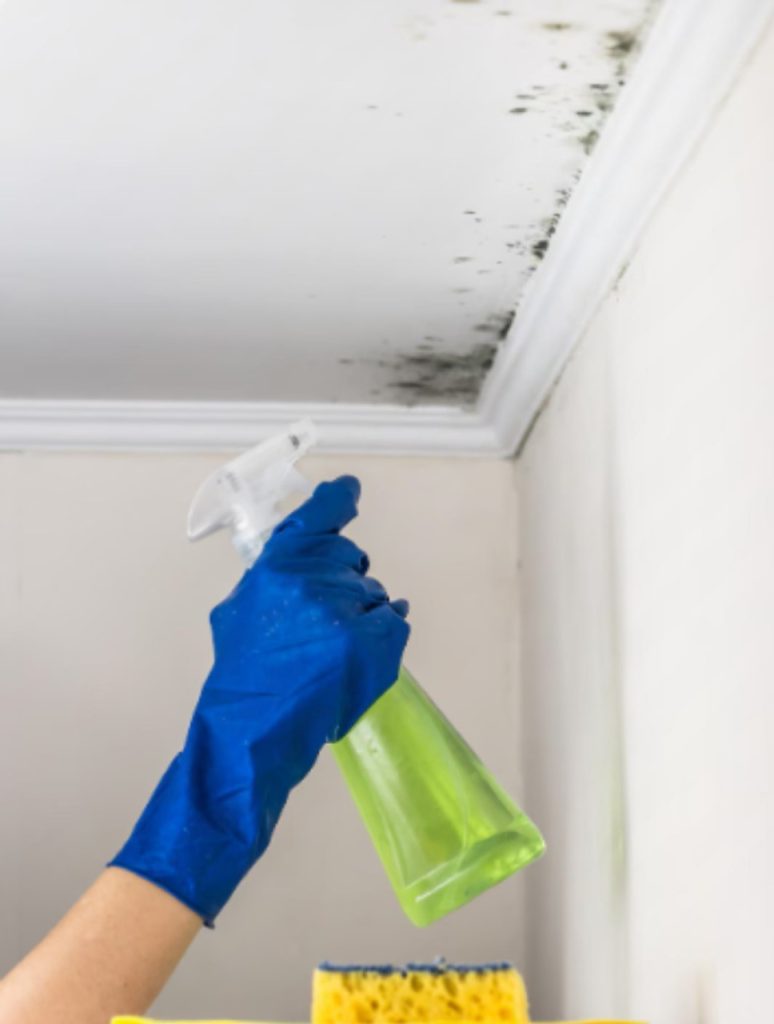
Finding hidden mold is rarely about one test or one reading.
Revive Pro Restoration uses a step-by-step approach. It combines visual inspections, moisture detection, thermal imaging, and professional testing when needed.
The goal is to answer three important questions:
- Is moisture present?
- Is mold likely growing?
- What is causing the problem?
Once the source is identified, the focus shifts to fixing the moisture issue. We create a restoration plan that prevents the problem from returning.
When Should You Schedule a Professional Inspection?
Certain situations deserve professional attention.
Consider an inspection if:
- Musty odors persist
- Humidity stays above 60%
- Water damage recently occurred
- Allergy symptoms worsen indoors
- Air quality readings remain abnormal
Many homeowners ask:
“Do I really need an inspection if I cannot see mold?”
In many cases, yes.
Visible mold is often only a small part of the problem.
The larger issue may be hidden behind walls or under flooring.
What Happens If a Hidden Mold Is Left Untreated?
Mold rarely fixes itself. Moisture problems usually continue until the source is addressed.
Over time, mold may:
- Spread into new areas
- Damage drywall
- Affect insulation
- Stain surfaces
- Create persistent odors
Repair costs often rise the longer the problem remains hidden. A small moisture issue today can become a major restoration project later.
Hidden mold investigations require more than guesswork. It’s critical to protect the home before the damage spreads further.
A monitor can tell you something may be wrong. But if that musty smell keeps returning and the readings never seem quite right, what is really happening behind those walls?
FAQs
Can Air Quality Monitors Detect Black Mold?
Most air quality monitors cannot directly detect black mold. They measure things like humidity, particles, and VOCs in the air. These readings may suggest conditions where mold could grow, but they cannot confirm mold is present. To identify black mold, a professional inspection, moisture testing, or laboratory analysis is usually needed.
What Humidity Level Indicates Mold?
Humidity does not prove mold exists, but it can show when conditions are favorable for growth. Indoor humidity should ideally stay between 30% and 50%. When levels regularly rise above 60%, the risk of mold growth increases. If one room stays humid for long periods, hidden moisture may be present behind walls or ceilings.
How Do I Know If Mold Is Growing Behind My Wall?
Hidden mold often leaves clues before it becomes visible. Common signs include musty odors, peeling paint, wall stains, warped drywall, or allergy symptoms that seem worse indoors. However, mold can also grow without obvious warning signs. Professional moisture inspections, thermal imaging, and air testing can help confirm whether mold is present behind walls.
Is a Musty Smell Always Mold?
Not always. A musty smell can come from mold, but it can also be caused by damp building materials, poor ventilation, old carpeting, or moisture trapped in enclosed spaces. Still, a persistent musty odor should not be ignored. If the smell keeps returning, it is worth checking for hidden moisture or mold growth.
How Long Does Mold Take to Grow Behind Walls?
Mold can begin growing within 24 to 48 hours after materials become wet. A small leak behind a wall can create the right conditions very quickly. Over the following days and weeks, mold colonies may expand and spread through drywall, insulation, and wood framing. Early moisture control is the best way to prevent growth.