
Storm damage restoration starts with quick action and careful inspection. The right steps helps prevent further loss.
A storm can flip your day upside down in minutes. One minute it’s just wind and rain. Next, there’s water on the floor and shingles in the yard. It feels overwhelming. Where do you even begin?
What you do in the first few hours can decide how bad the damage gets. With a clear plan, you can take control and limit the impact.
Why Fast Storm Damage Restoration Matters
Storm damage does not stop when the rain ends. In fact, that’s when new problems begin.
Water seeps into walls. Wood starts to swell. That damp smell creeps in slowly. Give it a day or two, and mold may start growing behind the scenes. It’s like a domino effect.
Think about this. Would you ignore a small roof leak? Probably not. The same idea applies here. Acting fast saves time and money later.
What Storm Damage Can Affect in Your Home
Storms do not damage just one part of a house. They hit multiple areas at once.
Here’s what often gets affected:
- Roof shingles and flashing
- Windows and doors
- Walls and insulation
- Electrical systems
- Flooring and furniture
- Outdoor structures like fences or decks
Types of Storm Damage You Should Know
Not all storms cause the same kind of damage. Understanding the type of storm helps you respond the right way.
Wind and Tornado Damage
Strong winds can do more than just move things around. They can tear parts of your home apart in seconds.
Common signs include:
- Missing or lifted roof shingles
- Broken windows or cracked glass
- Fallen trees or branches
- Loose siding or gutters
Hail Damage
Sometimes hail does not seem like a big deal. But these small balls of ice hit hard and fast.
They can cause:
- Dents or bruises on shingles
- Loss of protective granules on the roof
- Chipped windows
- Destruction to AC units external to your property
Hail destruction is not noticeable from the ground. It starts appearing as leaks after a few weeks.
Hurricane or Tropical Storm Damage
In coastal places, storms bring wind and aggressive rainfall. These storms cause.
- Roof leaks. This comes from wind-driven rain
- Flooded interiors
- Damaged doors and windows
- Structural stress over time
Flash Flooding
Flooding is one of the most damaging storm effects. Water spreads fast and reaches places you would never expect.
It can affect:
- Flooring and carpets
- Walls and insulation
- Electrical systems
- Furniture and personal items
There is also something many homeowners do not realize. Standard home insurance usually does not cover flood damage. Separate flood insurance, often through the National Flood Insurance Program (NFIP), is required.
Lightning Damage
Lightning strikes are rare, but when they happen, the damage can be serious. They can cause:
- Power surges that damage electronics
- Burn marks or small fires
- Damage to wiring inside walls
- Tripped breakers or electrical failure
Storm Damage Restoration: 7 Critical Steps to Recover Fast
Each step builds on the next. Skipping one can lead to bigger problems later.
1. Ensure Safety First
Before anything else, check if your home is safe to enter.
Look around carefully. Are there fallen power lines nearby? Do you smell gas? Is part of the ceiling sagging?
If something feels off, trust that instinct. Step back and wait for professionals.
What to do to ensure safety
- Absolutely do not let standing water near electric outlets.
- Do not roam near destroyed structures.
- Do not use a candle. Grab a flashlight instead.
- Do not let children or pets roam toward storm-ruined areas.
2. Halt Additional Damage Immediately
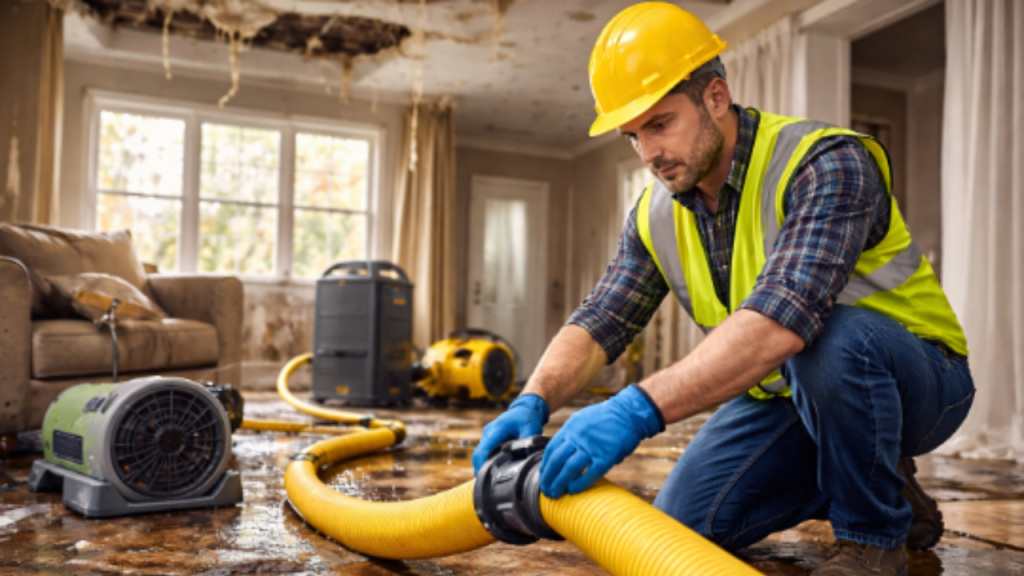
Storm destruction can spread over wide areas rapidly. Here’s how to halt it.
- Electrical safety is always first
Is water present near appliances? Stop the flow of power at the main panel. To do so, never make your way through standing water. If you don’t know how to do so, call an electrician. - Stop water intrusion next
Cover broken windows with plastic or boards. Use a tarp for roof leaks if it is safe to do so. Keep in mind, DIY tarping can fail if not secured well. In some cases, poor tarping can lead to more damage or affect your claim. - Check structural stability
Check for areas that have witnessed the most impact. Do not venture near these unsafe places. - Turn off utilities if required
Switch off the supply of the main water. This is the right thing to do in case pipes are destroyed. Is there a smell of gas in the air? Leave your property immediately. Call a gas company. - Safeguard your belongings
Gather your valuables and get them to a safe place.
3. Document All Damage for Insurance
This step protects your claim. If damage is cleaned or changed too soon, insurance companies may question what actually happened. In some cases, claims get reduced or denied.
Start by taking clear photos and videos before moving anything.
What to capture:
- Wide shots of each room to show the full scene
- Close-ups of damaged areas like walls, floors, and ceilings
- Roof, windows, and exterior damage
- Water lines or soaked sections
- Personal items, furniture, and electronics
Take photos from different angles. If possible, turn on time and date stamps in your camera settings. This adds credibility.
For appliances and electronics, take a close photo of the serial number and model label. This helps prove value later.
Next, write things down while details are fresh.
What to note:
- Date and time of the storm
- Weather conditions you noticed
- List of damaged items with rough value estimates
- Areas where water entered or damage started
Keep all receipts from emergency spending. This includes hotel stays, meals, or temporary repairs. Many policies cover this under “Loss of Use,” but only if you have proof.
Also, report the claim quickly. Most insurance policies expect notice within 24 to 72 hours.
Professional teams at Revive Pro Restoration often help with this step. We document damage in a way adjusters understand. That can make the process smoother and reduce back-and-forth later.
4. Remove Standing Water and Start Drying
Water is the biggest problem after a storm. It spreads fast and hides even faster. The sooner it is removed, the better the outcome.
There is a short window to act. Mold can begin to grow within one to two days in damp conditions. That is why drying is not something to delay.
Start with basic cleanup:
- Use towels or mops for small puddles
- Use a wet vacuum if you have one
- Open windows if the weather allows
- Set up fans to move air
But not all water is the same.
Water categories matter:
- Category 1 (Clean water): From rain or a clean pipe
- Category 2 (Grey water): From appliances like washing machines
- Category 3 (Black water): Floodwater or sewage. This is hazardous and unsafe to handle without proper gear
Storm flooding often falls into Category 3. It can carry dirt, bacteria, and even chemicals. In those cases, cleanup should be handled by professionals.
Also, fans and open windows only dry what you can see. Moisture can stay trapped under floors or inside walls. That hidden dampness leads to bigger problems later.
Professional drying uses specialized tools:
- Air movers to push moisture out of materials
- Dehumidifiers to pull water from the air
- Desiccant systems for deeper drying in dense areas
Moisture meters are then used to check if everything is truly dry before repairs begin.
What looks dry is not always dry.
5. Check for Hidden Damage
Storms often leave behind hidden issues. Look for signs like:
- Warped walls or floors
- Paint bubbling or cracking
- A damp or earthy smell
- Soft spots in wood
Ask yourself a simple question. Does something feel different than before the storm?
If the answer is yes, there may be damage beneath the surface.
6. Clean and Sanitize Affected Areas
Stormwater is not always clean. It can carry dirt, bacteria, and debris. That means cleaning is not just about appearance. It is about health too.
Focus on:
- Disinfecting hard surfaces
- Washing fabrics and upholstery
- Removing debris and dirt buildup
- Drying everything completely
7. Start Repairs and Restoration
This is where your home begins to feel normal again.
Repairs can range from small fixes to major rebuilding. It depends on how severe the damage is.
Common restoration work includes:
- Replacing drywall and insulation
- Repairing roofing and siding
- Fixing flooring and ceilings
- Restoring electrical and plumbing systems
This step takes time. Patience matters here. Rushing repairs can lead to mistakes that cost more later.
Common Challenges During Storm Damage Restoration
Some common challenges include:
- Insurance claim delays
- Hidden damage showing up later
- Finding reliable contractors
- Managing daily life during repairs
It can feel like juggling too many things at once. That’s completely normal. The key is to stay organized and take one step at a time.
When Should You Call a Professional?
There are clear signs when expert help is needed:
- Water has soaked into walls or flooring
- Mold smell starts to appear
- Structural damage is visible
- Electrical systems are affected
- You are unsure about safety
Water damage can lead to mold within 24 to 48 hours. That window is short.
Professionals use tools that go beyond what the eye can see:
- Moisture meters to detect hidden dampness
- Thermal cameras to find trapped moisture
- Industrial drying equipment for deep drying
They also help handle insurance paperwork, which can take a lot off your plate.
For homeowners in places like San Diego or Los Angeles, where sudden storms and coastal moisture mix, professional help often speeds up recovery and prevents long-term issues.
If the damage feels bigger than what you can manage, reaching out to a storm damage restoration expert like Revive Pro Restoration can save both time and stress.
A storm may last a few hours. But the way you respond can shape the next few weeks or even months.
So the real question becomes this. When the next storm hits, will you know exactly what to do first?
FAQs
Does homeowners insurance cover all storm damage?
No, not all storm damage is covered. Most policies cover wind, rain, and sudden damage. But flood damage is usually not included. That needs separate flood insurance. Coverage also depends on the cause and condition of the home. Always check your policy details and report damage quickly to avoid claim issues.
How long does storm damage restoration take?
It depends on how bad the damage is. Small issues may take a few days. Moderate damage can take one to two weeks. Severe damage may take several weeks or longer. Drying alone can take 3 to 5 days. Repairs and inspections add more time depending on the situation.
What should I do in the first hour after storm damage?
Focus on safety first. Check for hazards like exposed wires or gas smells. Then stop further damage if possible. Cover broken windows and move items to dry areas. Take photos before cleaning anything. Acting fast in that first hour can prevent bigger problems later.
Can I stay in my home during storm damage restoration?
It depends on the damage level. For minor issues, staying may be safe. But if there is water damage, mold risk, or structural problems, it may not be safe. Strong odors, noise, and equipment can also make it hard to stay. A professional can help decide what is best.
How do I find a trustworthy storm damage restoration company?
Look for licensed and insured companies with good reviews. Check if they offer emergency services and clear estimates. Ask about their experience with insurance claims. A reliable company explains the process clearly and does not pressure you. Local companies with a strong reputation are often a safer choice.
What is storm damage restoration going to cost?
Costs vary based on damage size and type. Minor repairs may cost a few hundred dollars. Larger restoration projects can cost several thousand dollars or more. Water damage, mold, and structural repairs increase costs. Insurance may cover part of the expense, depending on your policy.
How do storm chasers target homeowners after a storm?
Storm chasers often go door to door after a storm. They offer quick repairs and push for fast decisions. Some ask for large upfront payments. Others may not be licensed. It’s best to avoid signing anything on the spot. Take time to verify the company before agreeing to any work.
Does storm damage always need a professional?
Not always. Small and surface-level issues can sometimes be handled at home. But hidden damage, water intrusion, or structural problems need expert help. Mold can also grow quickly if not treated right. When in doubt, a professional inspection is the safer option.
What’s the difference between water damage restoration and storm damage restoration?
Water damage restoration focuses only on water-related issues like leaks or flooding. Storm damage restoration covers a wider range. It includes wind, roof damage, broken windows, and water intrusion. Storm restoration often involves multiple repairs at once, while water damage is more focused on drying and cleanup.