
Emergency fire blankets are simple safety tools that smother flames quickly.. They cut off oxygen, and stop small fires before they spread.
Fires often start small. A pan overheats or a candle tips over. These moments feel minor at first. Then things change fast. In cities like San Diego and Los Angeles, open kitchens and compact living spaces make small fires spread quicker than expected.
That is where emergency fire blankets come in. They are easy to use and fast to deploy. Best of all, they do not require special training. But many homeowners are not sure when or how to use them.
Let’s find out all the things you should know about them
What Is an Emergency Fire Blanket?
It is basically a sheet. This sheet is created out of a material resistant to heat. The blanket is built in a way that it covers flames. It stops oxygen. When that is blocked, the fire cannot continue.
Fiberglass is a common material used for making these blankets. For their storage, compact cases are used.
Here is a quick look:
| Feature | Details |
| Material | Heat-resistant fabric |
| Purpose | Smother small fires |
| Size | Usually 3×3 ft or larger |
| Use | One-time or limited reuse |
Unlike extinguishers, blankets do not spray chemicals. That makes them cleaner and easier to use indoors.
Why Every Home Needs One
Fire emergencies rarely come with a warning. They often start when least expected.
Think about everyday situations:
- Cooking in a busy kitchen
- Charging devices overnight
- Using space heaters in cooler months
Now ask yourself. Would you know what to grab at that moment?
Emergency fire blankets are helpful because they:
- Work instantly without setup
- Do not create mess like extinguishers
- Are safe for use on people and surfaces
- Are easy for beginners to handle
This makes them ideal for homes, apartments, and even small offices.
Emergency Fire Blankets vs. Fire Extinguishers
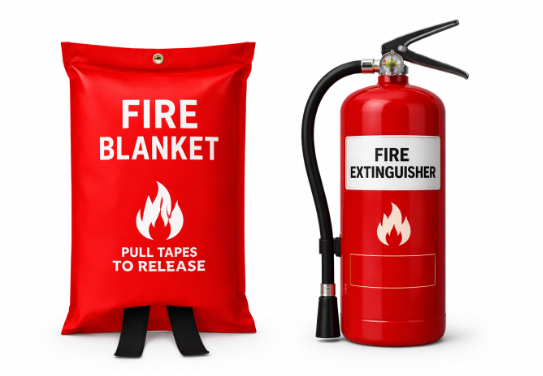
Both tools serve a purpose. But they work differently.
| Factor | Fire Blanket | Fire Extinguisher |
| Ease of use | Very simple | Requires training |
| Mess | No residue | Leaves powder or foam |
| Best for | Small fires | Larger or spreading fires |
| Maintenance | Minimal | Needs regular checks |
A blanket is often the first line of defense for small fires. An extinguisher is better for larger or more complex situations.
Fire Classes Explained (A, B, C, K)
A fire blanket works well in some cases, but not in all. So before using one, it helps to understand fire classes. These categories explain what is burning and how it should be handled.
| Fire Class | What Is Burning | Common Examples |
| Class A | Solid materials | Wood, paper, cloth |
| Class B | Flammable liquids | Oil, gasoline, grease |
| Class C | Electrical equipment | Wiring, appliances |
| Class K | Cooking oils and fats | Deep fryers, kitchen pans |
Each class behaves differently. That is why the right response matters.
Where Fire Blankets Work Best
Fire blankets are most effective when the fire is small and contained. They work by cutting off oxygen, so they perform best on surface-level flames.
Here is how they match with each fire type:
- Class A fires (wood, paper):
A blanket can handle small flames. It works well for minor items like paper or fabric. - Class B fires (liquids like oil or fuel):
This is where blankets shine. They are very effective for small grease or liquid fires. - Class K fires (kitchen oils and fats):
These are common in homes. A blanket is one of the safest ways to control these fires without spreading them. - Class C fires (electrical):
A blanket can help, but only if the power is turned off first. Live electricity adds extra risk.
Where Fire Blankets Do NOT Work
Some fires need special tools. A blanket is not the right choice here.
- Class D fires (flammable metals):
These involve metals like magnesium or lithium. They need special extinguishing agents. A blanket will not work and may even be unsafe.
Quick Decision Guide
| Situation | Can You Use a Fire Blanket? |
| Small grease fire in a pan | Yes |
| Burning paper or cloth | Yes |
| Small electrical fire (power off) | Yes |
| Large spreading fire | No |
| Metal fire (rare at home) | No |
7 Powerful Uses of Emergency Fire Blankets
1. Put Out Kitchen Fires Fast
Kitchen fires are the most common type of home fire. In fact, cooking equipment is involved in about 49% of all reported home fires. Unattended cooking is the leading cause.
One important rule stands out. Never throw water on a grease fire. It will spread the flames and make the situation worse.
What You Should Do First
Before using a fire blanket, take one quick step if it is safe.
- Turn off the heat source
- Switch off the stove or burner
How to Use a Fire Blanket on a Kitchen Fire
Now use the blanket the right way. Technique makes a big difference here.
- Hold the blanket in front of you like a shield
- Move slowly toward the fire
- Place it gently over the pan
- Cover the flames completely with no gaps
Important Safety Rules to Follow
These small details can prevent the fire from coming back.
- Do not lift the blanket to check the fire
Lifting it too soon lets oxygen back in, which can restart flames - Wait at least 15 to 20 minutes
This gives the fire enough time to cool fully - Never try to move a burning pan
Carrying it can spread fire and cause serious burns
2. Protect a Person From Flames
Clothing fires can spread in seconds. They are serious and often linked to cooking accidents. In fact, clothing fires account for about 7% of home cooking fire deaths. Oven or cooktop fires are involved in around 88% of cooking fire deaths.
What to Do Right Away
If someone’s clothes catch fire, act fast but stay controlled.
- Tell them to stop, drop, and roll
- This helps slow the flames before using the blanket
How to Use a Fire Blanket on a Person
Now step in with the blanket. Approach carefully to avoid getting hurt.
- Move in from behind the person if possible
- This keeps you away from flames near the face
- Hold the blanket in front of you as protection
- Wrap it fully around the burning area
- Press gently to smother the flames
Keep the Person Still
Once wrapped, do not rush to remove the blanket.
- Help the person stay on the ground
- Do not let them stand or run
- Movement can bring in more air and restart flames
When to Call 911
Call 911 immediately if:
- Clothing was on fire at any point
- There are visible burns
- The person feels pain or discomfort
- Smoke was inhaled
3. Stop Small Electrical Fires
Electrical fires often start from faulty wiring or overloaded outlets. Using water is not safe here. It increases the risk of shock. A fire blanket provides a safer option:
- Turn off power if possible
- Place the blanket over the source
- Keep a safe distance
4. Shield Yourself While Escaping
A fire blanket can act as a protective shield:
- Wrap it around your body
- Cover your head and shoulders
- Move quickly through the exit path
5. Control Outdoor Fires
Backyard grills and fire pits can flare up unexpectedly. A blanket can help manage these situations:
- Cover the fire source carefully
- Reduce oxygen supply
- Prevent flames from spreading
6. Handle Car Fire Emergencies
Car fires are rare but dangerous. They can start from engine issues or accidents. A small fire blanket stored in the car can help:
- Use it only for small fires
- Cover the flame area quickly
- Step back once the fire is controlled
7. Keep in Emergency Kits
Emergency kits often include flashlights, first aid, and water. But fire safety tools are sometimes missing.
Adding a fire blanket makes the kit more complete.
It is compact, lightweight, and easy to store. That makes it a practical addition for homes and travel.
How to Use a Fire Blanket Safely
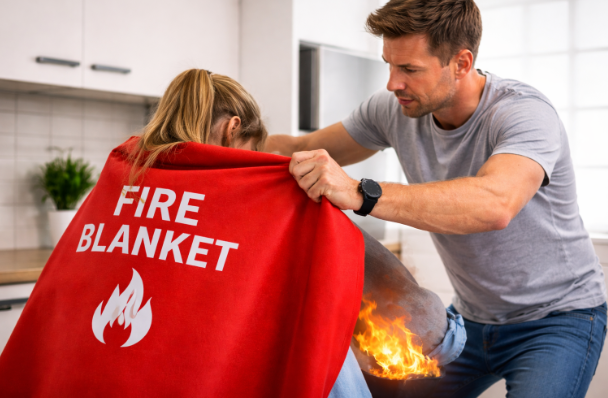
Follow these steps in order. Each step plays a role in keeping you safe.
- Stay at a safe distance first
Do not rush in too close. Stand back and assess the fire. This gives you time to act without panic. - Pull the blanket out carefully
Remove it from the case using the tabs. Keep your grip firm and steady. - Hold the blanket in front of you
Use it as a shield between you and the fire. This protects your hands and upper body from heat. - Approach slowly and steadily
Move toward the fire with small steps. Keep the blanket raised as a barrier. - Place it gently over the fire
Do not throw it. Lay it down softly so it covers the flames fully. - Seal the edges completely
Make sure no gaps are left open. Oxygen can enter through small spaces and keep the fire alive. - Leave it in place and wait
Do not lift it too soon. Fires can look out but still have heat underneath. Wait until everything cools down.
What If the Fire Does Not Go Out?
Sometimes the fire may not respond as expected.
- If flames continue after about 30 seconds, stop and step away
- Evacuate the area immediately
- Call 911 or emergency services
Safety Tips Most People Miss
Small details can make a big difference during use.
- Wear gloves if possible
Many blankets are made from fiberglass. Direct contact can irritate the skin. - Do not touch the hot surface
Even after flames stop, heat can remain underneath. - Keep your face and body protected
Always keep the blanket between you and the fire.
After the Fire Is Out
Once the fire is controlled, do not rush to remove the blanket.
- Let it cool down completely
- Do not grab it from the edges right away
- Avoid shaking it, as this can release heat or particles
Where Should You Keep Fire Blankets?
Placement matters more than people think. During an emergency, you do not want to have to search for it.
Good locations include:
- Kitchen walls near cooking areas
- Garage or workshop spaces
- Near fireplaces or heaters
- Inside emergency kits
Keep it visible and easy to grab.
When to Call a Professional
Some warning signs show that the damage goes deeper than it looks.
- Smoke spreads to other rooms or lingers in the air
- Walls or ceilings show dark stains or yellow marks
- Surfaces feel sticky or have a burnt smell
- Paint starts to peel or bubble
- You feel unsure about the safety of the space
What Smoke and Soot Damage Looks Like
Smoke and soot do not stay in one place. They travel through the air and settle on many surfaces.
Here is what to watch for:
| Area | Common Signs |
| Walls and ceilings | Dark streaks or light yellow stains |
| Furniture | Fine black dust or greasy residue |
| Fabrics | Lingering smoke smell |
| Air vents | Soot buildup inside ducts |
Hidden Damage Most People Miss
Some of the most serious damage stays out of sight.
- Heat can weaken materials inside walls
- Smoke can enter ducts and spread through the home
- Fire-fighting efforts can leave moisture behind
- Residue from fire retardants can settle on surfaces
Health Risks You Should Not Ignore
Smoke and soot are not just messy. They can affect your health.
- Breathing in soot particles can irritate lungs
- Smoke residue can trigger allergies or asthma
- Lingering odors may signal trapped contaminants
Why Professional Inspection Matters
After a fire, a proper inspection helps find both visible and hidden damage. Professionals can:
- Identify hidden smoke and soot buildup
- Check structural safety
- Remove deep odors and residue
- Restore affected areas properly
Professional restoration can prevent long-term issues and reduce repair costs.
What to Do After You’ve Contained the Fire
Stopping the fire is a big step. But the job is not fully done yet. Even a small fire can leave damage behind that is easy to miss at first.
What Damage Can Still Be Present
Fire creates heat, smoke, and soot. Each one affects your home in a different way.
Here is what often remains:
- Smoke residue on walls and ceilings
It can leave stains and a strong smell that lingers - Soot on furniture and surfaces
This fine black dust can damage materials over time - Odor trapped in fabrics and air
Curtains, carpets, and cushions absorb smoke quickly - Water damage from firefighting efforts
This can lead to damp spots and mold risk later
Hidden Damage You Might Not See
Some damage stays out of sight. Common hidden areas include:
- Inside walls and insulation
- Under flooring and cabinets
- Inside air ducts and vents
When to Call a Professional
Consider calling a professional if:
- Smoke smell stays for more than a day
- Soot covers more than a small area
- Walls or ceilings show discoloration
- You notice damp spots or peeling paint
Professionals use tools to check areas that are not visible. This helps find damage early and fix it properly.
What the Restoration Process Looks Like
Fire damage restoration follows a step-by-step process. Each step focuses on making your home safe and clean again.
| Step | What Happens |
| Inspection | Experts assess visible and hidden damage |
| Cleaning | Soot and residue are removed from surfaces |
| Deodorizing | Odors are treated using special equipment |
| Drying | Moisture is removed to prevent mold |
| Repairs | Damaged areas are restored or replaced |
This process helps bring your space back to normal, both in look and safety.
Fires do not wait for preparation. They happen fast and without warning. The real question is simple. If a small fire starts today, would you have the right tool within reach?
FAQs
Are fire blankets better than fire extinguishers?
Fire blankets and extinguishers serve different needs. Blankets are best for small fires, especially in kitchens. They are simple to use and do not leave a mess. Extinguishers work better for larger or spreading fires but need some training. Many homes keep both for full safety.
Can a fire blanket be reused?
Most fire blankets are meant for one-time use. After use, they may lose strength or get damaged by heat. Even if they look fine, it is safer to replace them. This ensures they work properly in the next emergency.
What fires should you NOT use a fire blanket on?
Fire blankets are not suitable for large or fast-spreading fires. They also do not work on metal fires, known as Class D fires. These need special tools to control them. If the fire feels out of control, it is best to leave and call emergency services.
How big a fire can a fire blanket put out?
Fire blankets are designed for small, contained fires. They work well on stovetop fires, small objects, or clothing fires. If flames are spreading beyond a small area, a blanket may not be enough. In that case, evacuate and call for help.
Do fire blankets expire?
Fire blankets do not expire in the same way as food, but they can wear out over time. Check the packaging for manufacturer guidelines. Regular inspection helps ensure they stay in good condition. If damaged, they should be replaced.
Where is the best place to store a fire blanket?
Keep a fire blanket in easy-to-reach places. The kitchen is the most important spot. You can also store one in the garage or near heating areas. It should be visible and quick to grab during an emergency.